SNF, MNF, and TNF Primetime Betting Markets
 Available in US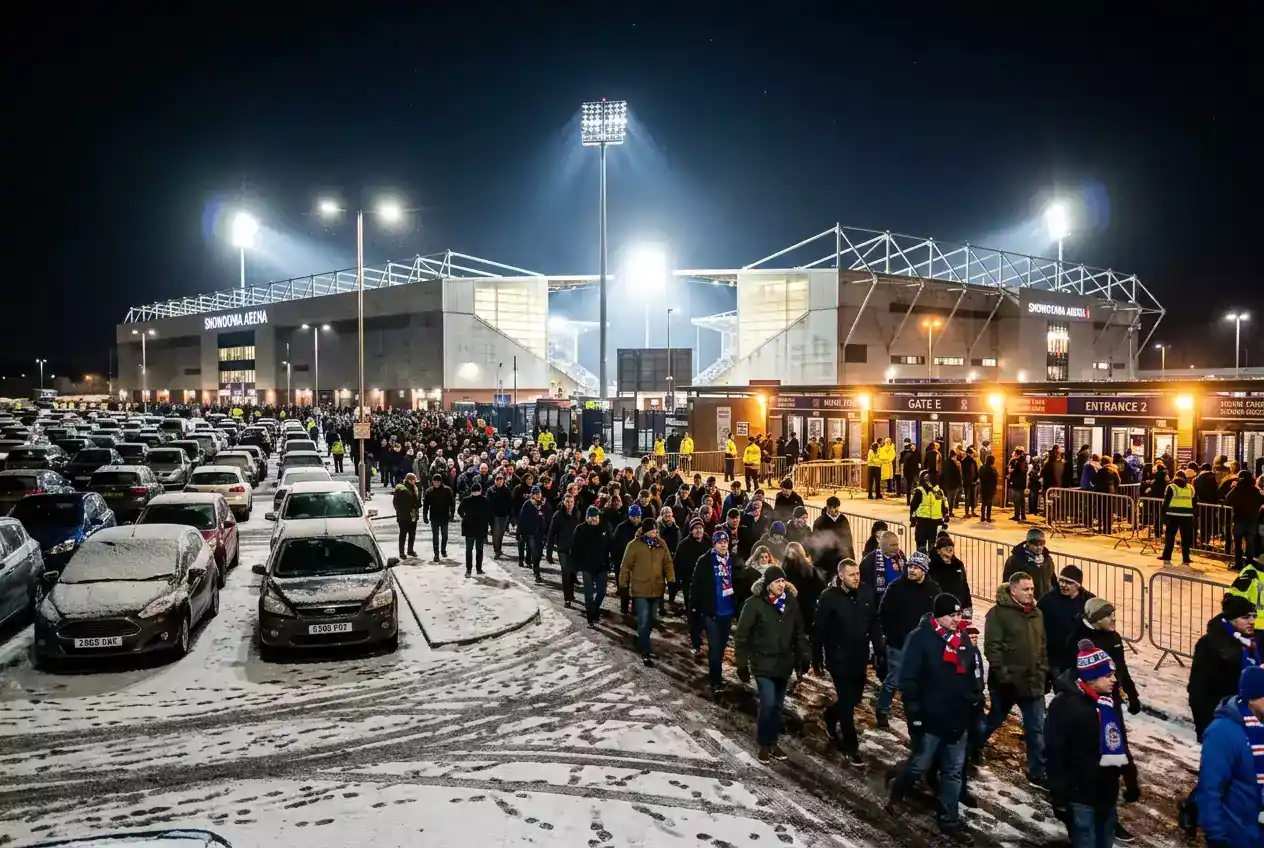
Pricing Dynamics for Isolated NFL Primetime Markets
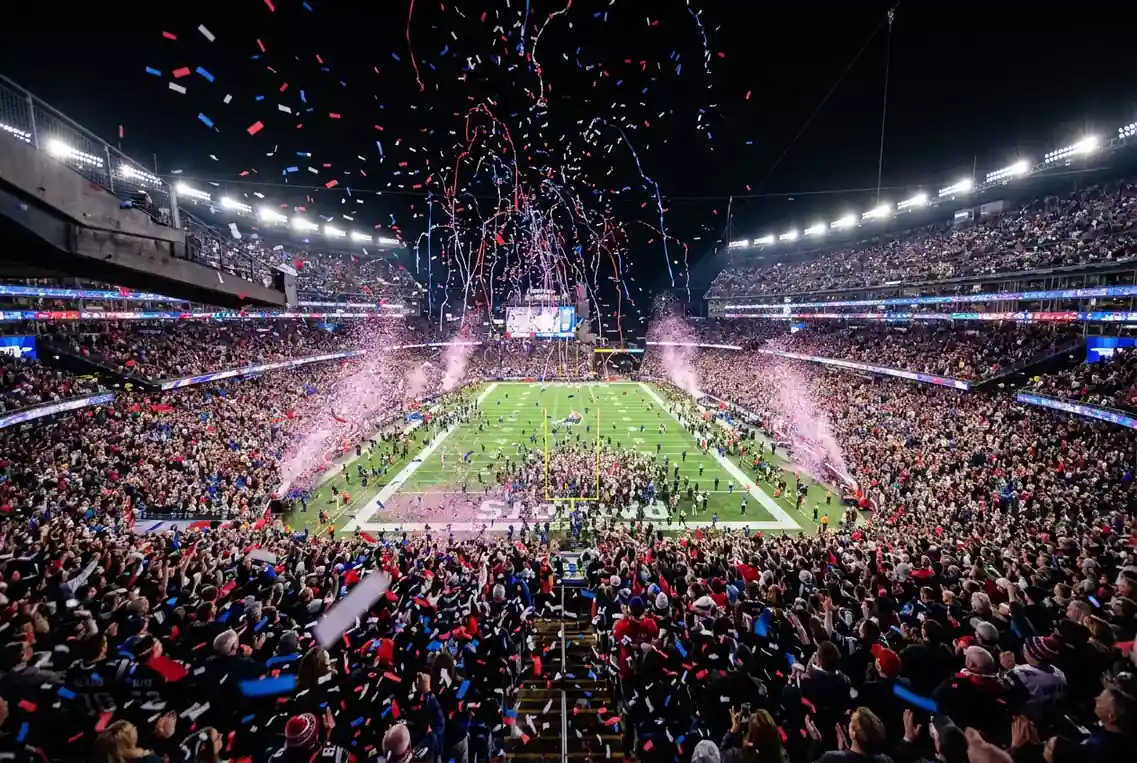
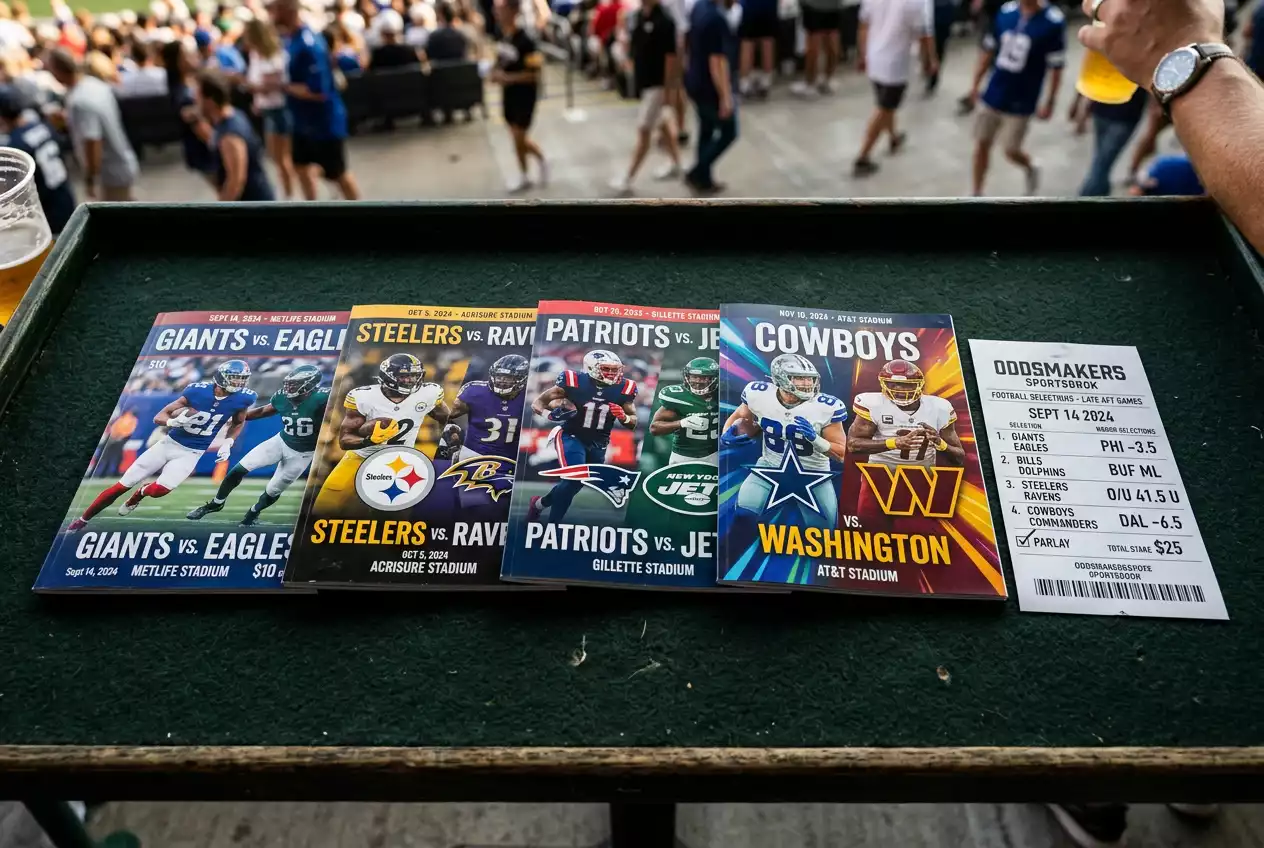
Sunday Night Football is the most-watched programme in American television, week after week. Monday Night Football and Thursday Night Football are the sport’s marquee mid-week slots. These three primetime windows get the best matchups, the most commentary, and — the part that matters for punters — the most public betting money. I’ve watched primetime NFL odds for a decade, and the pattern is consistent: the primetime market is among the most heavily public-facing markets in NFL betting, which means the pricing dynamics are different from a 6pm early-window game between two mid-table teams.
For UK punters, the primetime games have a specific scheduling reality. Sunday Night Football kicks off at 1:20am UK time on Monday morning. Monday Night Football runs from 12:15am to 5am Tuesday morning. Thursday Night Football is a Friday morning affair in UK terms, kicking off at 1:20am. These are the games most difficult to watch live from Britain, which creates a specific betting profile: more pre-game and less in-play, more planning and less reaction. Understanding the primetime market’s specific properties is valuable even if you’re placing your bets before going to bed and checking results in the morning.
Late-night NFL betting in the UK has grown significantly — figures from Entain show that post-midnight wagering on NFL events rose 13% between 2023 and 2025, with the primetime slots driving most of that growth. The audience betting on SNF, MNF, and TNF from the UK is real and engaged, even at antisocial hours.
Sunday Night Football Markets and What Public Money Does to the Line
Sunday Night Football features the league’s most attractive matchup of the week, selected by the NFL as part of a “flex scheduling” system that allows the league to move games into the primetime slot as the season develops and competitive stakes become clearer. This means SNF in the second half of the season reliably features teams with playoff significance on both sides.
The public money dynamic in SNF is the defining characteristic of the market. Casual bettors who only engage with one or two games per week gravitate toward the SNF game because it’s nationally promoted and universally accessible. That public concentration drives moneyline prices on popular teams — particularly the Chiefs, Cowboys, Eagles, and other high-profile franchises — below what their true probability warrants. The SNF spread on a favoured household-name team has historically been the most systematically unfavourable market for the value-seeking bettor.
The inverse opportunity is the SNF underdog on a team that is genuinely competitive but doesn’t carry public support. A team from a smaller market, less media coverage, or a less glamorous identity may be getting the correct probability from oddsmakers but receiving less than their share of public money. When those teams are playing as underdogs in SNF, the spread may offer better value on the perceived-weaker team than equivalent games in the early Sunday window.
The “SNF effect” on totals is also worth noting. Public bettors who bet the total often go over in high-profile games because they associate the best teams with high-scoring football. When the SNF matchup features two offensively capable teams, the over is frequently over-backed and the total line moves above fair value. SNF unders in games involving two elite offences have historically outperformed over-back totals, partly for this reason.
Monday Night Football’s Compressed Week Dynamic
Monday Night Football creates a unique weekly rhythm for the teams involved. A team playing MNF has one fewer day of preparation than teams playing in the early Sunday window, which means their injury report cycle is compressed and their opponent has had more time to prepare. This scheduling asymmetry has measurable effects on performance, particularly for teams playing MNF after a physically demanding previous week.
The line-setting challenge for MNF is that injury reports develop and finalise through Sunday while the game is Monday. Teams playing in the early Sunday window have their injury statuses confirmed; MNF teams still have a full day before inactive lists are published. Late injury news filtering through Sunday afternoon can move MNF lines before UK punters are even awake. The practical implication is to check MNF lines on Monday morning UK time, after Sunday’s games and injury updates have filtered through, rather than relying on the line you saw on Friday.
The late-week preparation advantage applies to the team with more rest. If both MNF teams played Sunday in the previous week, the preparation window is equal. If one team played Thursday Night Football in the previous week and has therefore had an extra day of rest by Monday, that rest advantage occasionally shows up in performance and is worth tracking in the spread research.
Thursday Night Football and the Short Week
Thursday Night Football gives teams only four days between games — roughly half the normal preparation window. This compressed schedule affects injury recovery, game planning, and execution in ways that don’t apply to the rest of the week’s games. The market knows this, and the TNF spread already prices in some degree of performance variance. The question is whether the market prices it correctly.
Home teams in TNF have historically covered the spread at a higher rate than neutral expectation would predict. The reasoning is partly logistical — the home team doesn’t need to travel on a compressed schedule — and partly about crowd energy, which is amplified by the national broadcast context. Home teams in Thursday night games also benefit from the familiar environment during high-pressure situations where execution can break down. This isn’t a universal rule, and the market has absorbed much of this tendency into opening lines, but it’s a starting prior worth carrying into TNF research.
The injury report on Thursday night games is published Wednesday and Thursday, compressed from the normal three-day cycle. This creates a genuinely smaller information window before the market closes. Any player listed as Questionable on Wednesday has their status resolved much more quickly than in a Sunday game, and the line will move rapidly Thursday afternoon based on practice participation updates. Getting on a TNF line before the Wednesday injury report is often the best-value window, before the market processes injury news that may move the spread significantly.
Totals in TNF tend to be lower than equivalent Sunday matchups, and unders have shown a long-run edge across the data set. Short weeks suppress offensive execution — both teams run more conservative play-calling when preparation time is limited, route combinations are simplified, and quarterbacks work from a narrower playbook. The under in TNF isn’t a guaranteed play but it’s a structural tendency worth incorporating as a starting prior in your research. For the broader timing and pre-game strategy for NFL betting across all windows, the full guide to NFL kick-off times for UK punters sets out the complete schedule structure and when each window’s markets are most accessible.
Sunday Night Football kicks off at 8:20pm Eastern, which translates to 1:20am UK time (Monday morning) during GMT (October through March). During BST (April through September), the difference narrows to 5 hours, making the kick-off approximately 1:20am as well since US time doesn’t shift in sync with UK clocks. The game runs approximately 3 hours and 10 minutes, ending around 4:30am UK time. Yes, systematically. Sunday Night Football attracts heavy public money on favoured high-profile teams. The market absorbs this public betting pressure by shortening the favourite’s moneyline and sometimes moving the spread slightly in the favourite’s direction. This creates residual value on the underdog in SNF games when the underdog is genuinely competitive — meaning the public money is distorting the line rather than correctly pricing the favourite’s strength. Identifying the difference between a correctly short favourite and a distorted one is the research task. The under in Thursday Night Football has shown a structural long-run edge across historical data. Compressed preparation time limits offensive execution, pushes teams toward conservative play-calling, and generally suppresses scoring relative to Sunday game equivalents. This tendency is partly priced in by bookmakers, who typically set TNF totals slightly lower than Sunday equivalents. But when TNF features teams with strong defences or conservative offensive schemes on a short week, the case for the under strengthens further and may exceed the line’s already-conservative adjustment.What time does Sunday Night Football kick off for UK punters?
Does the public money bias in SNF create value on underdogs?
Are NFL Thursday Night Football totals worth betting under?
Published by the bet on nfl Football team.