Converting Formats and NFL American Odds Explained
 Available in US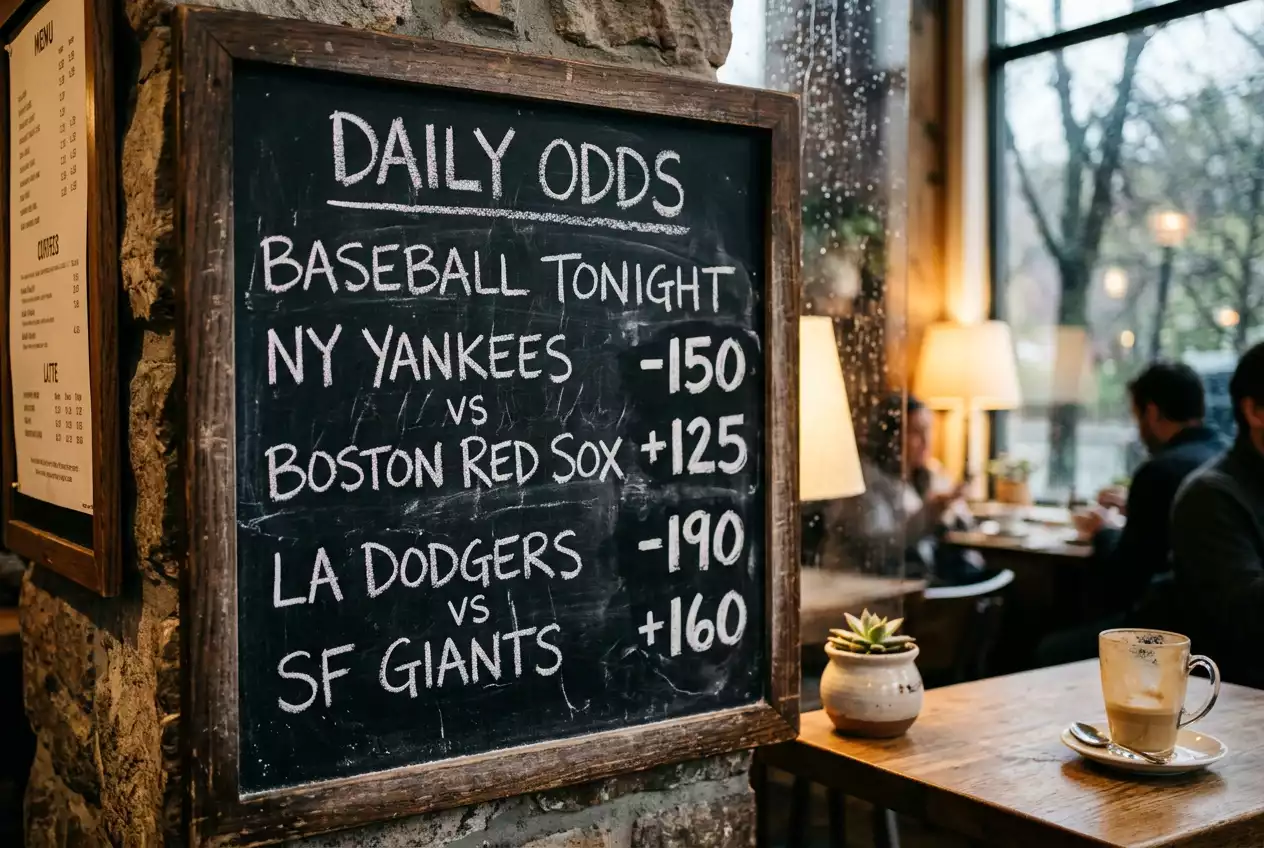
Calculating Bookmaker Vig from American Odds
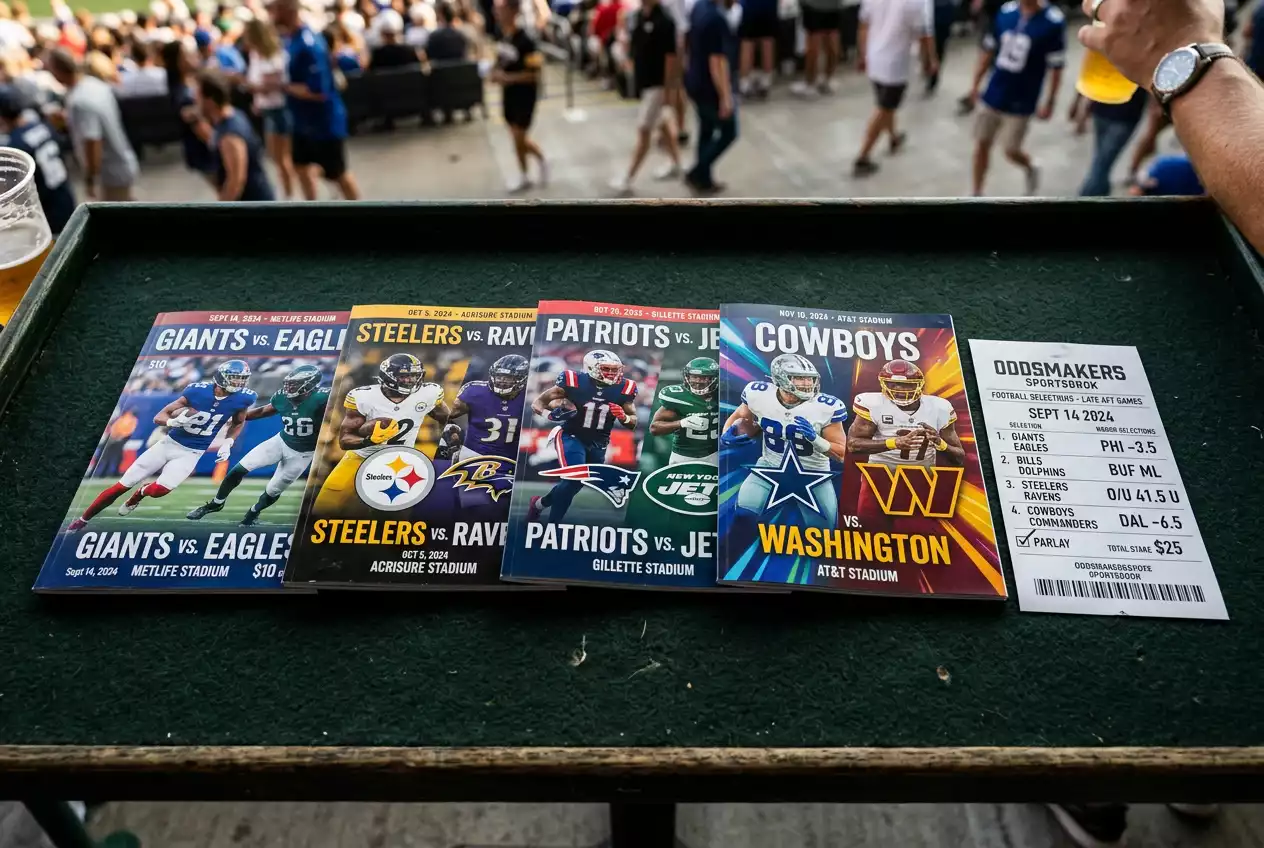
The first time I saw a US sportsbook line displayed as -135/+115, I genuinely thought it was some kind of data error. It looked nothing like the odds I’d grown up with — decimal prices like 1.74 or 2.10, or even the fractional odds I’d learned to convert as a teenager. The American odds format is deeply counterintuitive for anyone who learned to bet in the UK, and yet it appears constantly in NFL content: podcasts, Twitter threads, US betting sites, Reddit discussions.
Most UK bookmakers display NFL odds in decimal by default, and you can bet a full season without ever encountering American odds on your actual platform. But if you’re following NFL betting discourse at all — and the community for UK NFL punters is active and growing, with around 14.3 million NFL followers in the UK — you’ll read American odds format constantly. The inability to quickly interpret what a price means or how it compares to your decimal reference point is a genuine handicap.
This guide is about making American odds as readable to you as decimal. The goal is mental arithmetic — being able to look at -180 or +240 and instantly know what kind of price that is, without needing a conversion tool.
How American Odds Work
American odds centre on a £100 stake. That doesn’t mean you stake £100 — it means the numbers represent returns per £100 unit, and you scale proportionally from there.
Negative numbers represent favourites. The number tells you how much you need to stake to win £100 profit. -200 means you stake £200 to win £100 profit, returning £300 total. -110 means you stake £110 to win £100 profit, returning £210 total. The larger the negative number, the stronger the favourite (the more you stake for the same profit).
Positive numbers represent underdogs. The number tells you how much profit you’d make on a £100 stake. +200 means a £100 stake wins £200 profit, returning £300 total. +110 means a £100 stake wins £110 profit, returning £210 total. The larger the positive number, the bigger the underdog (the more profit per stake unit).
Even money — a 50/50 proposition — is represented as +100: a £100 stake wins £100 profit. Note that -100 and +100 are mathematically equivalent and should be the same price; the convention is to display it as +100 for even money, though you’ll occasionally see -100 used by some US operators.
The practical mental shortcut: a negative sign means you’re the one doing the financing (you risk more than you gain per unit), a positive sign means you’re the one receiving the financing (you gain more than you risk per unit). Favourites require more stake per unit of return; underdogs offer more return per unit of stake.
Converting American Odds to Decimal and Fractional
For negative odds (favourites): decimal = (100 ÷ absolute value) + 1. So -200 becomes (100/200) + 1 = 0.5 + 1 = 1.50. And -110 becomes (100/110) + 1 = 0.909 + 1 = 1.91. Memorise a few reference points: -100 = 2.00, -110 = 1.91, -150 = 1.67, -200 = 1.50, -300 = 1.33.
For positive odds (underdogs): decimal = (odds ÷ 100) + 1. So +200 becomes (200/100) + 1 = 2 + 1 = 3.00. And +130 becomes (130/100) + 1 = 1.30 + 1 = 2.30. Reference points: +100 = 2.00, +110 = 2.10, +150 = 2.50, +200 = 3.00, +300 = 4.00.
Fractional conversion from American: for negatives, the fraction is 100/absolute value, simplified. -200 becomes 100/200 = 1/2. -150 becomes 100/150 = 2/3. For positives, the fraction is odds/100, simplified. +200 becomes 200/100 = 2/1 or evens plus. +150 becomes 150/100 = 3/2. UK fractional odds are used less and less even by British bookmakers, but the conversion is useful for older reference materials.
The quick-read heuristic that I use: anything below -100 is a favourite (decimal below 2.00). Anything above +100 is an underdog (decimal above 2.00). The size of the number tells you how extreme the favourite/underdog status is. -350 is a heavy favourite (decimal 1.29). +350 is a big underdog (decimal 4.50). That mental framework — big number means big edge in that direction — lets you assess any American odds line at a glance without doing arithmetic.
The Vig and What It Means for UK Punters
The “vig” (short for vigorish) is the American term for what UK punters call the bookmaker’s margin. In NFL spread betting, the standard pricing is -110 on both sides — both the favourite and the underdog side of the spread are priced at -110, which is 1.91 in decimal. If both sides were truly 50/50, fair odds would be -100 (2.00 decimal) on each. The difference between -100 and -110 represents the bookmaker’s edge — roughly 4.5% on the two-sided market.
Understanding vig in American odds is straightforward: if you add the implied probabilities of both sides of a two-way market, the total exceeds 100% by the margin amount. At -110/-110, each side implies 52.4% probability (100/110 = 90.9%, wait — actually 110/210 = 52.4%). The sum of both sides: 52.4% + 52.4% = 104.8%. The excess 4.8% is the vig.
Some US sportsbooks offer “reduced juice” or “no vig” lines at -105 or even -102 on spread markets. If you encounter these through US-facing discussion or comparison, the decimal equivalent of -105 is approximately 1.952 — meaningfully better than the standard 1.909. UK operators rarely offer explicit reduced juice promotions on NFL, but enhanced-odds offers around marquee games occasionally achieve similar effect. For a complete framework of how to assess whether the price you’re being offered represents value relative to the true probability, NFL betting strategy for UK punters covers the full calculation methodology.
How do I convert +200 American odds to decimal format?
For positive American odds, divide by 100 and add 1. So +200 becomes (200 divided by 100) plus 1 = 3.00 decimal. A £10 stake at +200 returns £30 total (£20 profit). The quick mental reference: +100 equals 2.00, +200 equals 3.00, +300 equals 4.00 — each additional +100 adds exactly 1.00 to the decimal price for round numbers.
Why do some UK bookmakers still display NFL odds in American format?
Some UK operators offer an American odds display option because a portion of their NFL audience — particularly those who follow US betting content — is more comfortable reading prices in that format. A few operators default to American odds specifically for NFL markets as a signal of their NFL credentials. Most UK users can switch between decimal, fractional, and American formats in their account settings. American format is neither better nor worse than decimal — it’s the same information expressed differently.
Created by the ”bet on nfl Football” editorial team.