Market Systems and NFL Betting Strategy
 Available in US
Table of Contents
- Beating Bookmaker Margins with Value Betting Systems
- Understanding Bookmaker Margin and Why It Matters
- Value Betting in NFL: Finding the Gap Between Price and Probability
- Rest and Schedule Edges in NFL Betting
- Line Shopping: The Simplest High-Value Habit in NFL Betting
- Betting Discipline: The Framework That Keeps You in the Game
Beating Bookmaker Margins with Value Betting Systems
I want to start with something that most NFL betting content doesn’t say plainly enough: the bookmaker’s margin is real, persistent, and the primary reason most punters end the season worse off than they started. It’s not bad luck. It’s not backing the wrong teams. It’s the structural edge that every UKGC-licensed bookmaker builds into their prices from the moment the market opens. No strategy eliminates that edge entirely. But the right approach narrows it significantly, and in some cases, turns it in your favour.
Around 10% of UK adults bet on sport online, and the amount wagered on American football has been growing steadily for several years. The audience is real, the interest is genuine, and the markets are mature enough to offer genuine opportunities for punters willing to put in the analytical work. The majority don’t. They pick teams based on which kit they prefer, which quarterback they watched on Sky last week, or which narrative the media has been running. Against that backdrop, being systematic isn’t difficult; it’s just less common than it should be.
This guide covers the four strategic pillars I’ve spent nine years refining: understanding bookmaker margin, identifying value, exploiting rest and schedule edges, and line shopping. These aren’t tricks. They’re a framework for making NFL betting decisions that are grounded in probability rather than preference.
A core component of long-term profitability is utilizing NFL value betting tips to identify overpriced favorites and hidden edges in the market.
Understanding Bookmaker Margin and Why It Matters
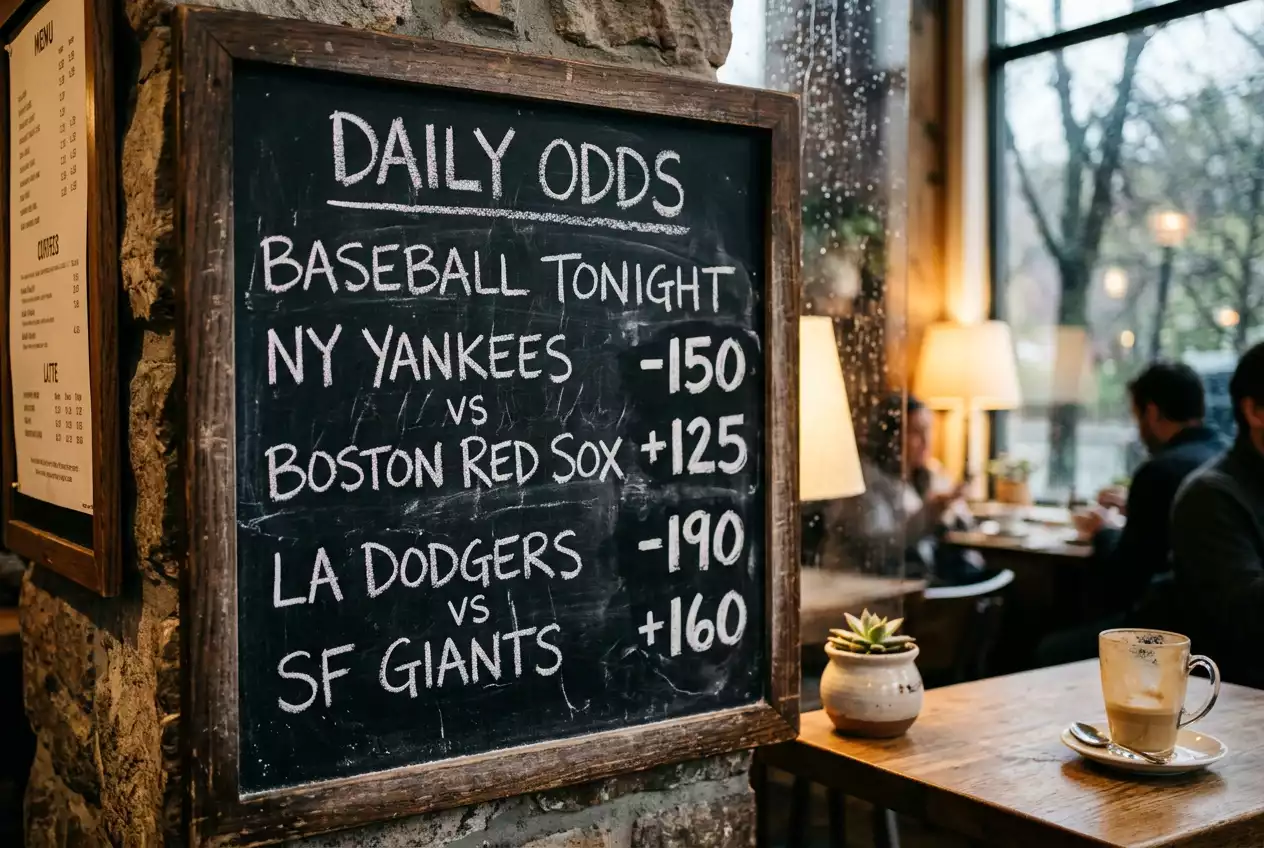
Every spread bet at -110 (or 1.909 in decimal terms) tells you something specific: the bookmaker is charging you for the right to bet. At true 50/50 odds, both sides of a coin flip would be priced at 2.00 (evens). At -110, both sides are priced at 1.909. The “missing” value is the margin, which represents roughly 4.5% of your stake returning to the bookmaker over time regardless of outcomes. On a 100-bet sample at £10 per bet, that’s approximately £45 in built-in losses before you’ve made a single incorrect prediction.
The margin varies by market type and platform. Mainstream spread bets on prime-time games often carry margins around 4-5%. Player prop markets typically run 8-12%. Novelty Super Bowl markets can exceed 20%. Knowing the margin you’re facing on each bet is the starting point for evaluating whether you have enough edge to overcome it.
Implied probability is the tool you use to connect bookmaker odds to expected outcomes. The formula for calculating implied probability from decimal odds is: 1 divided by the decimal odd. So 1.91 converts to 1/1.91 = 52.4%. This means the bookmaker’s price implies a 52.4% chance of that outcome occurring. To have positive expected value on this bet, your own assessment must put the probability above 52.4%. If you genuinely think a team has a 58% chance of covering the spread and the bookmaker has them at 52.4%, you have a 5.6 percentage point edge — enough to expect positive returns over a large sample of similar bets.
The uncomfortable truth is that most punters have no systematic method for estimating the true probability of an outcome. They make qualitative assessments (“this team is better,” “the home side has the advantage”) without anchoring those assessments to specific numbers. The transition from qualitative to quantitative thinking, even a rough, explicit estimate, is one of the highest-leverage improvements a punter can make. You don’t need a sophisticated model. You need to make your reasoning explicit enough that you can compare it to what the market is saying.
Closing line value is the concept that connects pre-game probability assessment to eventual outcomes. The closing line (the spread at kick-off) is generally considered the most efficient market price, because it reflects the most information available. If you consistently beat the closing line (your pre-game price is better than where the market ultimately settles), that’s strong evidence you’re identifying genuine value. Tracking closing line value over a full season is one of the most honest indicators of whether your analysis is working.
One practical implication: it matters which day of the week you place your NFL bets. Lines open early in the week, often Monday or Tuesday for the following week’s games. Professional money hits first and moves lines toward true probability quickly. By Friday, most obvious inefficiencies have been corrected. There are exceptions: late injury news creates new windows, but the general principle holds: the earlier in the week you act on well-reasoned analysis, the more likely you are to get a price that exceeds the closing line. Placing Sunday afternoon on a whim, on lines that have been refined by a week of professional action, is the least favourable entry point.
Value Betting in NFL: Finding the Gap Between Price and Probability
Value betting isn’t complicated in principle. It’s complicated in practice because the estimation work is genuinely difficult and the feedback loop is slow. But the principle is simple: a bet has value when the probability of the outcome is higher than the probability implied by the price.
The NFL market is enormous, but it’s not perfectly efficient. Sharp bettors find edges regularly, particularly in early-week lines before significant money has been placed, in less-followed games (early-window Sunday games attract less market attention than prime-time games), and in markets where public sentiment creates consistent mispricings. Popular teams like the Chiefs, the Cowboys, and the Eagles attract disproportionate public money that can push their lines further than the underlying data justifies. Fading the public on overpriced favourites is a documented long-term edge in NFL betting, though it requires patience because it doesn’t win every week.
The statistical infrastructure around NFL is genuinely excellent. PFF (Pro Football Focus) grades every player on every play. Next Gen Stats provide tracking data on player routes, separation from coverage, and quarterback time-to-throw. Teams and coaching tendencies are analysable in ways that other sports don’t offer because the play-by-play data is granular. If you’re willing to use these resources before deciding where to bet, you’re already ahead of most of the recreational market.
One specific value pattern I return to regularly: divisional games. Teams in the same division play each other twice a season and know each other intimately. Defensive coordinators have weeks of film on the opposing offence’s tendencies. The “better team” according to season record often underperforms against divisional opponents because the familiarity compresses quality differences. Lines that reflect the season-long form without adjusting for divisional dynamics are frequently worth examining for value on the underdog side.
Weather is systematically underpriced in NFL outdoor stadiums. Cold, wind, and precipitation genuinely affect scoring, particularly passing yards and totals. The market adjusts for weather, but not always quickly enough or by enough. A game projected at a total of 47.5 between two pass-heavy offences, where Friday’s weather forecast changes to high winds at game time on Saturday, often still shows a total that’s too high at kick-off. The window to exploit that mispricing is between when the weather forecast updates and when the bookmaker adjusts the line, sometimes just a few hours.
Totals betting (over/under on combined points) deserves specific attention as a value vehicle. While the spread attracts the most public money and gets the most attention, totals markets are sometimes set with less analytical rigour at smaller bookmakers. The variables that drive totals (pace of play, defensive quality in the secondary, quarterback health, and weather) are well-documented and quantifiable. A punter who builds even a basic model for projected scoring is working with more rigour than most of the recreational money on the total side, and that gap shows up in results over time.
Build a sustainable bankroll by following the advice provided by the top NFL betting resource for UK punters.
Rest and Schedule Edges in NFL Betting
The NFL schedule creates structural asymmetries between teams that are genuinely exploitable because they’re partially underpriced. The most documented of these is the rest advantage.
A team playing on ten days’ rest (coming off a bye week) versus a team playing on six days’ rest (on a short turnaround from the previous week) is not a level playing field. The team on rest has had extra time to prepare, to recover from injuries, and to refine their game plan. The statistical record on bye-week teams outperforming their spread is meaningful enough that professional bettors have used it as a primary screen for years. It’s now somewhat better-known and more priced in than it used to be, but the full value hasn’t been arbitraged away, particularly in games where the bye-week team is an underdog getting less attention.
The Thursday Night Football schedule creates a specific and predictable disadvantage for teams playing on short rest. A team that played on Sunday and now faces a Thursday game has three days to prepare, recover, and travel. If that team is also travelling across multiple time zones (a West Coast team flying to the East Coast for Thursday), the disadvantage compounds. Lines on these games frequently undervalue the disadvantage for the short-rest team, particularly when the short-rest team is favoured and the public is backing them heavily based on season record rather than situational context.
The NFL’s international series adds another scheduling edge for UK punters specifically. Teams designated as the “home” team for a London game have been in the UK for a week or more ahead of kick-off, but their opponents arrive Thursday or Friday. The jet lag differential is real. The “visiting” team (the one arriving later) has adjusted to UK time less fully. Data from previous London games shows the team with more preparation time in-country has outperformed expectations more often than not, though the sample size is still relatively small.
In 2025, the NFL ran a record seven international games, including three in London. That’s a meaningful sample now, and the pattern has been consistent enough that bookmakers have begun adjusting for it more explicitly. But adjusting for it partially is not the same as adjusting for it fully. For a UK punter who follows these games closely, the information advantage you have over a US-based casual punter is genuine. You understand the time zone adjustment in a way they don’t because you’ve lived it.
Line Shopping: The Simplest High-Value Habit in NFL Betting
If I could give one piece of strategy advice to someone just starting to bet on NFL, it would be this: open accounts at three or more UKGC-licensed bookmakers before you place a single bet, and always check the spread and price across all of them before committing. Line shopping isn’t glamorous. It’s not the kind of advice that generates excitement. But it’s the highest-return activity available to a recreational punter because it requires no predictive skill, only organisation.
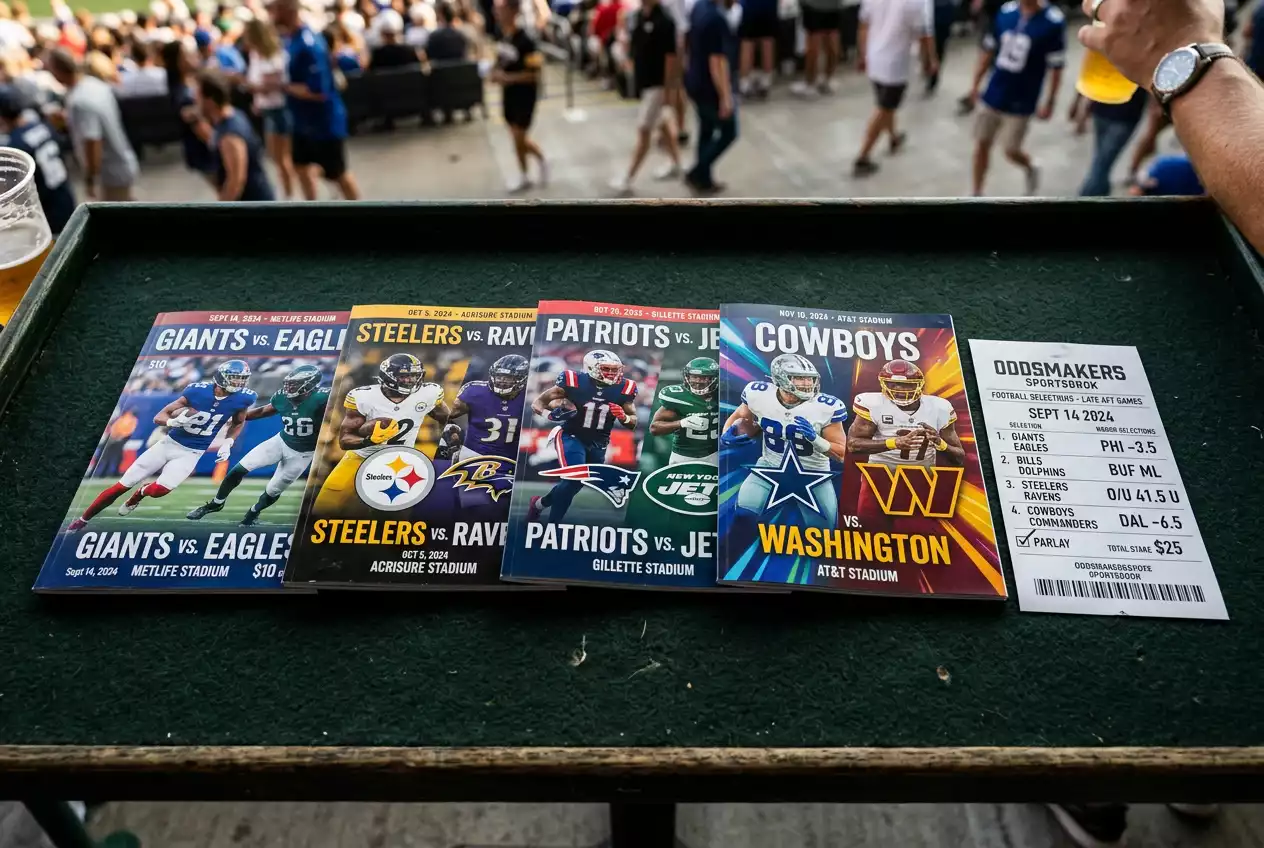
The variation between platforms on NFL spread prices is real and meaningful. A game where one bookmaker has the spread at -3 (1.91) might have the same game at -2.5 (1.91) on another, or at -3 (1.95), a better price for the same line. Over the course of a season, the combination of getting a half-point better line when it’s available and capturing slightly better prices compounds into a significant difference in your overall return. The Entain group reported a 12% year-on-year increase in UK and European Super Bowl bets for the most recent cycle; that’s a growing market with growing competition between operators, which means better prices and better lines for punters willing to shop.
Line shopping is also useful as a diagnostic tool. When you see significant discrepancy between what two platforms are offering on the same game, it often signals something: a large bet on one side at one platform, or different injury interpretations between the two pricing teams. That discrepancy is worth investigating before you place, because the side that’s getting the better number from one platform often has a reason for it.
For totals markets specifically, line shopping can mean the difference between the over at 44.5 and the over at 45.5, a full point that, depending on the game’s likely scoring range, can be the difference between a winning and a losing bet. Line discrepancies on totals are often larger than on spreads, because bookmakers are less uniform in their totals assessments than in their spread assessments for popular games. Finding the lowest available total on an over bet, or the highest available total on an under, is one of the clearest forms of free edge available to UK NFL punters.
Betting Discipline: The Framework That Keeps You in the Game
All the analysis in the world is useless without a staking and discipline framework that keeps you playing long enough for the edge to materialise. NFL is a long season spanning 272 regular-season games across 18 weeks plus playoffs, but a punter who has exhausted their bankroll by Week 8 from chasing losses and over-staking strong feelings won’t be around for the second half of the season, where the schedule thins out and the value concentrates.
Flat staking means betting the same amount on every bet regardless of how confident you feel. It is the simplest framework and the one most practitioners recommend to start with. The reason is psychological rather than mathematical: confidence is a poor predictor of accuracy, and the bets you feel most certain about are often the ones where public bias has influenced your assessment. A 2-unit bet on a game where you’re “very confident” is usually just a 2-unit bet where you’ve convinced yourself not to check the other side’s argument.
A unit of 1-2% of your total bankroll per bet is the range most professional frameworks suggest. At 1%, you can sustain a twenty-bet losing run without dropping below 80% of your starting bankroll. At 5%, a ten-bet losing run, not unusual in NFL betting — cuts your bankroll to 60%. The ability to absorb variance is not just mathematically important; it’s psychologically important. A depleted bankroll encourages bad decisions. A healthy bankroll encourages patience.
Record keeping is the discipline tool that most punters skip and most regret skipping. A simple log (date, team, market, line, side, price, result) takes thirty seconds per bet and gives you something invaluable after a hundred bets: actual evidence of whether your process is working. Most losing punters genuinely believe they’re “unlucky” rather than systematically making decisions with negative expected value. The records make the truth visible, which is uncomfortable in the short term and valuable in the long term.
Psychological traps in NFL betting are real and specific. The “homer bias” (overrating teams you’ve watched closely and underrating those you don’t follow) is one. The “narrative bias” (backing the team with the compelling storyline because media coverage has made them feel more likely to win) is another. The “recency bias” — dramatically adjusting your assessment of a team based on last week’s result rather than the underlying quality — is the most common. Building a pre-bet checklist that forces you to verify your analysis against the numbers rather than the narrative is the simplest way to protect against all three.
For deeper reading on the specific mechanics of staking — including the Kelly criterion explained in practical terms — the guide to NFL bankroll management covers the mathematics without the abstraction.
How do I calculate the implied probability from NFL odds at UK bookmakers?
Divide 1 by the decimal odds. So 1.91 gives you 1/1.91 = 0.524, or 52.4%. This is the probability the bookmaker’s price implies for that outcome. If your own estimate of the true probability exceeds 52.4%, the bet has positive expected value. For American odds, convert to decimal first: for negative odds, divide 100 by the absolute value and add 1 (so -110 becomes 1.909). For positive odds, divide by 100 and add 1 (so +120 becomes 2.20).
What is a rest advantage in NFL betting and how significant is it statistically?
A rest advantage occurs when one team has significantly more preparation time than their opponent. The most well-documented version is the bye-week advantage: teams playing on ten or more days’ rest after a bye outperform their spread at a meaningful rate over large samples. Thursday Night Football short-rest disadvantages (teams playing on three to four days’ rest after Sunday) are similarly documented. The edge has narrowed as it has become better known, but it remains a useful screen for identifying games where situational factors are underpriced.
What advantages do NFL betting exchanges offer over traditional bookmakers?
Betting exchanges let you set your own price by laying a team (betting against them) or backing at odds slightly better than traditional bookmakers offer. For NFL, the advantages are tighter margins on major markets and the ability to trade positions — backing a team before the game and laying them live if the game plays out as expected. The main disadvantage is liquidity: NFL exchange markets in the UK are significantly thinner than football markets, which means larger bets may not be matched at your desired price.
How do I size my NFL bets to avoid ruin during a losing run?
Keep individual bets at 1-2% of your total bankroll. At 1%, you can lose twenty consecutive bets and still retain over 80% of your starting amount. Flat staking — the same amount on every bet — is recommended over variable staking for recreational punters because confidence and actual edge have a low correlation. Increase stakes only when your tracked results demonstrate consistent positive expected value over at least 100 bets, not because a particular game feels certain.
Published by the bet on nfl Football team.